
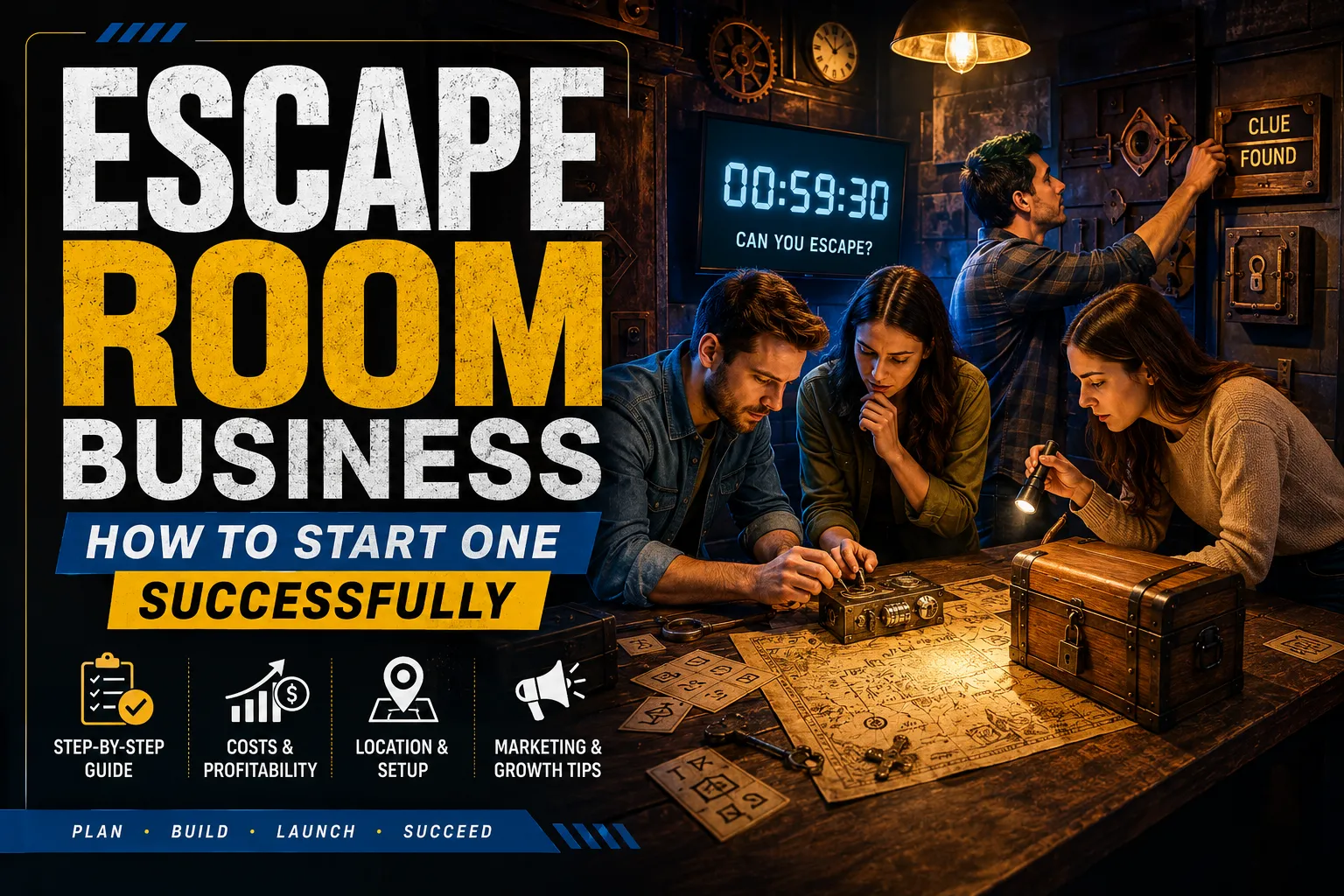
Escape Room Business: Quick Answer
Building puzzles is not enough to start an escape room business. A good business plan, an appropriate commercial property, attractive room layouts, the correct booking software, correct licensing and a solid marketing plan will be needed. The initial investment required for an escape room can differ significantly depending on the location and size, but with proper management, it can be a profitable entertainment venture with repeat customers and corporate bookings.
The U.S. Small Business Administration (SBA) states that two of the most crucial initial steps to take before starting any business is to develop a business plan and to know your market.
Why Start an Escape Room Business?
Escape rooms have become one of the fastest-growing forms of interactive entertainment. They attract:
- Friends and families
- Corporate team-building groups
- Tourists
- Birthday parties
- School groups
- Gaming enthusiasts
Escape rooms can also be more likely to experience repeat customers, as they can change the theme and update the puzzles regularly.
Many operators earn extra income by selling merchandise, gift cards, private events and corporate packages, all of which have positive reviews and creative experiences.
Step 1: Research Your Local Market
Before putting money into an investment, do some research on the competition in your area.
Ask yourself:
- How many escape rooms already exist nearby?
- Which themes are most popular?
- What pricing do competitors use?
- Which customer groups are underserved?
Research other establishments, read Google reviews and find ways to offer something different from what other businesses are doing.
It’s sometimes more important to create a unique theme than to provide more challenging puzzles.
Step 2: Create a Business Plan
A business plan can assist you in your decision making process and may be necessary if you are looking for financing.
Include:
Executive Summary
Describe your concept, target audience, and goals.
Startup Costs
Estimate expenses such as:
- Commercial lease
- Renovations
- Puzzle design
- Props and electronics
- Insurance
- Booking software
- Marketing
- Staff training
Revenue Model
Plan multiple income sources, including:
- Standard bookings
- Private events
- Corporate team-building
- Memberships
- Gift cards
- Merchandise
The SBA offers complimentary business planning tools to assist first-time business owners in creating realistic financial projections.
Step 3: Choose a Business Structure
Choosing the correct legal entity will shield your business and impact taxes.
Common options include:
- Sole Proprietorship
- Partnership
- LLC
- Corporation
Many small business owners choose an LLC because it offers liability protection while remaining relatively simple to manage.
You can learn more through the IRS Business Structure Guide.
Step 4: Find the Right Location
Location plays a major role in an escape room’s success.
Look for:
- High visibility
- Easy parking
- Nearby restaurants and entertainment
- Public transportation access
- Adequate square footage
- Emergency exits
- Compliance with local building and fire codes
Walkability tends to be higher in shopping centers, entertainment districts and downtown areas compared to isolated industrial areas.
If you’re interested in launching other service-based businesses, check out our guide on California Business Entity Search to learn how to verify and register business names before starting your company.
Step 5: Design Memorable Escape Rooms
The core of your business is your escape rooms. Engaging themes and storytelling keep visitors coming back and happy.
Popular themes include:
- Haunted House
- Prison Break
- Bank Heist
- Ancient Egyptian Tomb
- Space Mission
- Detective Mystery
- Zombie Survival
- Secret Laboratory
In creating puzzles, try to strike a balance between challenge and enjoyment. A room that is too challenging can lead to frustration for players, and a room that is too easy can decrease the replay value.
Invest in Quality Props
Professional looking sets, lighting, sound effects and interactive electronics make for a more immersive experience than just padlocks and printed clues.
Step 6: Purchase Equipment
In addition to props and decorations, you will need the right business equipment.
Typical purchases include:
- Security cameras
- Computer systems
- Booking software
- Electronic locks
- Timers and display screens
- Audio systems
- Walkie-talkies
- Emergency lighting
- Furniture for reception areas
If possible, use commercial-grade equipment to minimize maintenance expenses.
Step 7: Obtain Licenses and Insurance
The needs of business will differ depending on your city, state or country, but most operators require:
- Business registration
- Local business license
- Occupancy permit
- Fire safety approval
- General liability insurance
- Workers’ compensation insurance (if hiring employees)
Check with your local government and insurance company for proper coverage prior to opening.
For U.S. businesses, licensing information is available through the SBA License & Permits Guide.
Step 8: Choose Booking Software
A good bookings system enables customers to make bookings online and minimises admin.
Look for software that offers:
- Online payments
- Real-time availability
- Automatic confirmation emails
- Discount codes
- Gift card support
- Customer management
- Reporting and analytics
A lot of operators also embed booking software into their website and Google Business Profile.
Step 9: Market Your Escape Room Business
Even the best escape room won’t succeed without effective marketing.
Build a Professional Website
Your website should include:
- Online booking
- Room descriptions
- Pricing
- FAQs
- Location map
- Customer reviews
- Contact information
Optimize for Local SEO
Optimize your Google Business Profile, ask for customer reviews, and use location-specific keywords to boost your local search rankings.
Use Social Media
Share:
- Behind-the-scenes videos
- New room announcements
- Customer reactions
- Puzzle teasers
- Special promotions
- Seasonal events
Social media platforms such as Instagram, Facebook, TikTok and YouTube can be used to build organic interest and word-of-mouth referrals.
Common Mistakes to Avoid
When people start their escape room business, they often only think about creating puzzles and forget about the business part. To ensure long-term success, avoid these common mistakes.
Choosing the Wrong Location
A low-rent property may seem attractive, but poor visibility and limited parking can reduce customer traffic. Look for locations near restaurants, cinemas, shopping centers, or other entertainment venues where people already spend their leisure time.
Ignoring Customer Experience
A memorable experience leads to repeat bookings and positive online reviews. Train game masters to provide clear instructions, helpful hints, and excellent customer service without spoiling the game.
Underestimating Startup Costs
Besides construction and props, remember to budget for:
- Rent and utilities
- Insurance
- Marketing
- Staff wages
- Software subscriptions
- Equipment maintenance
- Room updates and repairs
Keeping a contingency fund can help cover unexpected expenses during your first year.
Failing to Refresh Rooms
Returning customers are more likely to revisit if you regularly introduce new themes, update puzzles, or host seasonal events.
Is an Escape Room Business Profitable?
Yes—an escape room business can be profitable when managed effectively.
Profitability depends on factors such as:
- Location
- Occupancy rate
- Pricing strategy
- Customer reviews
- Marketing effectiveness
- Number of available rooms
- Operating costs
Many successful operators increase revenue by offering:
- Corporate team-building events
- Birthday party packages
- School and university bookings
- Holiday-themed experiences
- Gift cards
- Merchandise
A diversified revenue stream can help reduce seasonal fluctuations and improve overall profitability.
Frequently Asked Questions
How much does it cost to start an escape room business?
Startup costs vary depending on the size of the venue, number of rooms, and location. A small operation may require tens of thousands of dollars, while larger, highly themed facilities can cost significantly more.
How many escape rooms should I open initially?
Many successful businesses start with two or three rooms. This provides customers with options while keeping startup costs manageable and leaving room for future expansion.
Do I need employees?
Yes. Even a small escape room business typically requires game masters, customer service staff, and someone to handle bookings, maintenance, and daily operations.
How long should an escape room game last?
Most escape room experiences last 45 to 60 minutes, with an additional briefing and debriefing period before and after the game.
What is the best marketing strategy?
A combination of local SEO, an optimized Google Business Profile, social media marketing, referral programs, partnerships with local businesses, and positive customer reviews is often the most effective approach.
Final Verdict
Starting an escape room business can be an exciting opportunity for entrepreneurs who enjoy creativity, entertainment, and customer engagement. Success requires more than clever puzzles—it depends on careful planning, a strong business model, an excellent location, effective marketing, and consistently delivering a memorable experience.
Before investing, create a detailed business plan, research your local market, understand licensing requirements, and develop unique room themes that stand out from competitors. With proper preparation and ongoing innovation, an escape room business can build a loyal customer base and generate sustainable long-term revenue.