
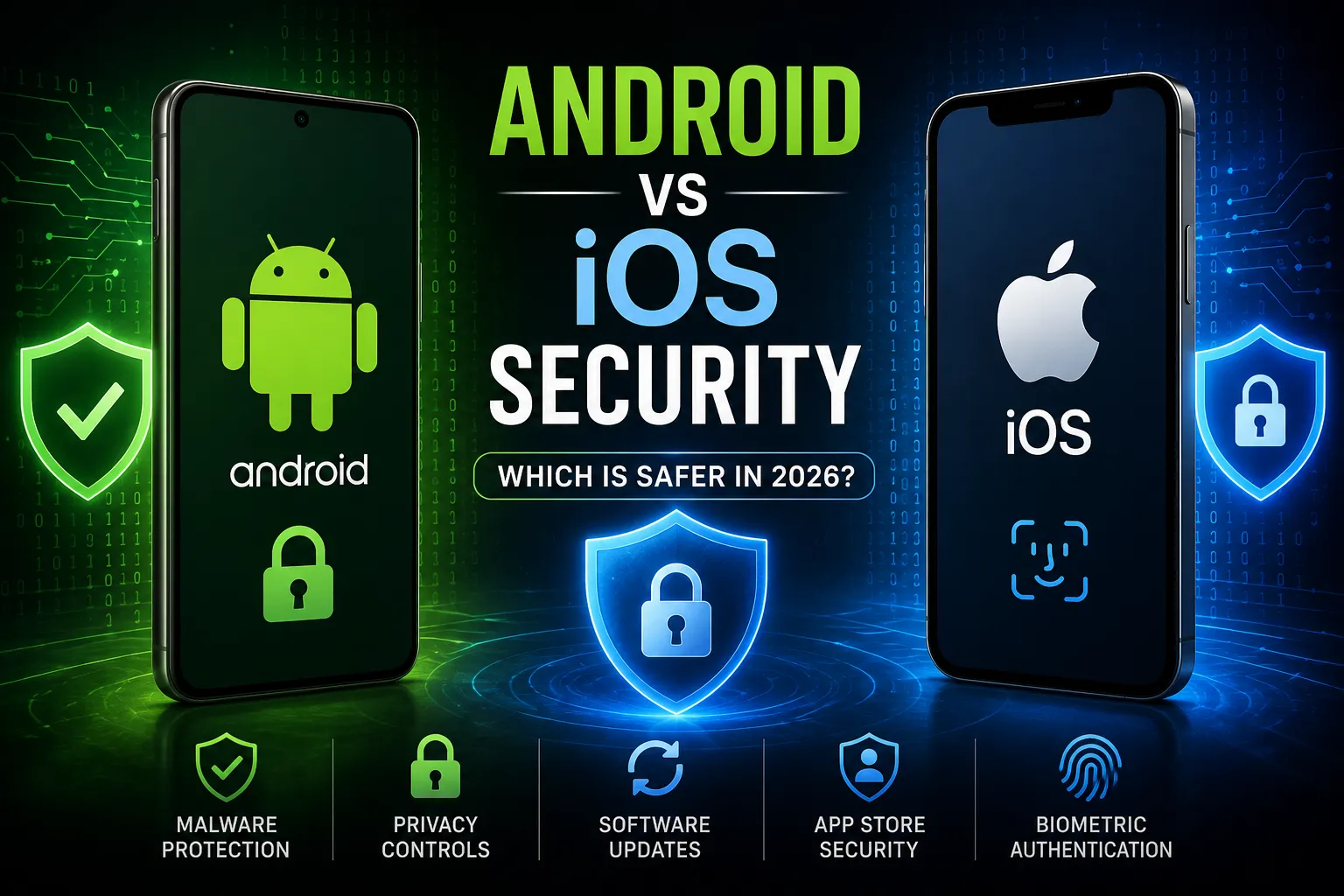
Android vs iOS Security: Quick Answer
Comparing Android vs iOS security, both operating systems provide robust security, albeit in different ways.
- iOS is a tightly controlled environment, has strict App Store reviews, and has very quick software updates, making it more secure for the average user.
- Android is more flexible and customizable, but security is not always as robust as it is on the iPhone, and can differ among manufacturers, versions, and app stores.
However, iOS offers a small edge to most users who value security and privacy. However, a good-quality Android phone from a trusted brand can also offer great security.
Android Security Overview
Android is a smartphone operating system developed by Google that is used by brands such as Samsung, Google Pixel, OnePlus, and Xiaomi.
Its security features include:
- Google Play Protect
- App permission controls
- Encrypted device storage
- Two-factor authentication support
- Regular security patches
- Biometric authentication (fingerprint and face unlock)
Android is an open system, so the update timelines may vary from device to device.
iOS Security Overview
Apple manufactures its own hardware and software, which enables greater integration and security for iPhones.
Key security features include:
- Strict App Store review process
- Fast software updates
- Face ID and Touch ID
- End-to-end encryption for many Apple services
- Secure Enclave for sensitive data
- Advanced privacy controls
Apple’s closed ecosystem makes it less likely that malicious applications will get to users.
Android vs iOS: Key Differences
| Feature | Android | iOS |
| App Installation | Play Store + third-party apps | Primarily App Store |
| Software Updates | Depends on manufacturer | Direct from Apple |
| Customization | High | Limited |
| Malware Risk | Higher | Lower |
| Privacy Controls | Strong | Very Strong |
| Ecosystem | Open | Closed |
Which One Is More Secure?
In most cases, iOS provides a small amount of security since Apple controls the hardware, software and update process. This ensures that security patches are delivered to supported devices in a timely fashion and exposure to malicious apps is minimized.
But Android has come a long way over the years. Android can also be very secure if you get your device from a trusted manufacturer, maintain it up to date, and download apps from trusted sources.
At the end of the day, using safe browsing habits, using strong passwords, using multi-factor authentication, and regularly updating are just as important as the operating system you use.
Interested in more technology comparisons? Read our guides on How to Use Meta AI, OpenDream AI, and Acely AI Review.
Frequently Asked Questions
1. Is Android or iPhone more secure?
In most cases, iPhones are more secure to use, as Apple has a tight grip on their hardware, software, app distribution, and software updates. But, the current Android phones from reputable manufacturers also have good security features.
2. Can Android phones get viruses?
Yes. Android devices are more vulnerable to malware particularly if apps are downloaded from unofficial sources. This risk is greatly minimized by installing apps from the Google Play Store and updating the device regularly.
3. Can iPhones be hacked?
Yes. There is no such thing as a hacker-proof or secure smartphone. While the iPhone has some built-in security measures, it’s wise to keep the iPhone up to date with the latest software and updates, and to use strong passwords and two-factor authentication.
4. Which platform offers better privacy?
Apple’s commitment to user privacy is evident in features such as App Tracking Transparency, on-device processing for many tasks and extensive app privacy controls. Android also offers comprehensive privacy controls, but this may differ depending on the device manufacturer.
5. Should I switch to an iPhone for better security?
If security and privacy are your top priorities, an iPhone may be a good choice. If you are more comfortable with Android’s flexibility and update your device regularly while taking proper precautions, however, then Android is a safe choice for everyday use.
Conclusion
There is no one-size-fits-all solution to the Android vs iOS security debate. Both platforms have strong security measures, including encryption and biometric authentication, and regularly update their security protocols.
In general, iOS is slightly better because of its tightly-controlled ecosystem and consistent software updates. But a good Android manufacturer can make a modern device as secure as long as it is maintained properly.
Regardless of the platform you use, the most effective ways to keep your personal data safe are to keep your phone updated, only download apps from trusted sources, use strong passwords, and enable multi-factor authentication.