
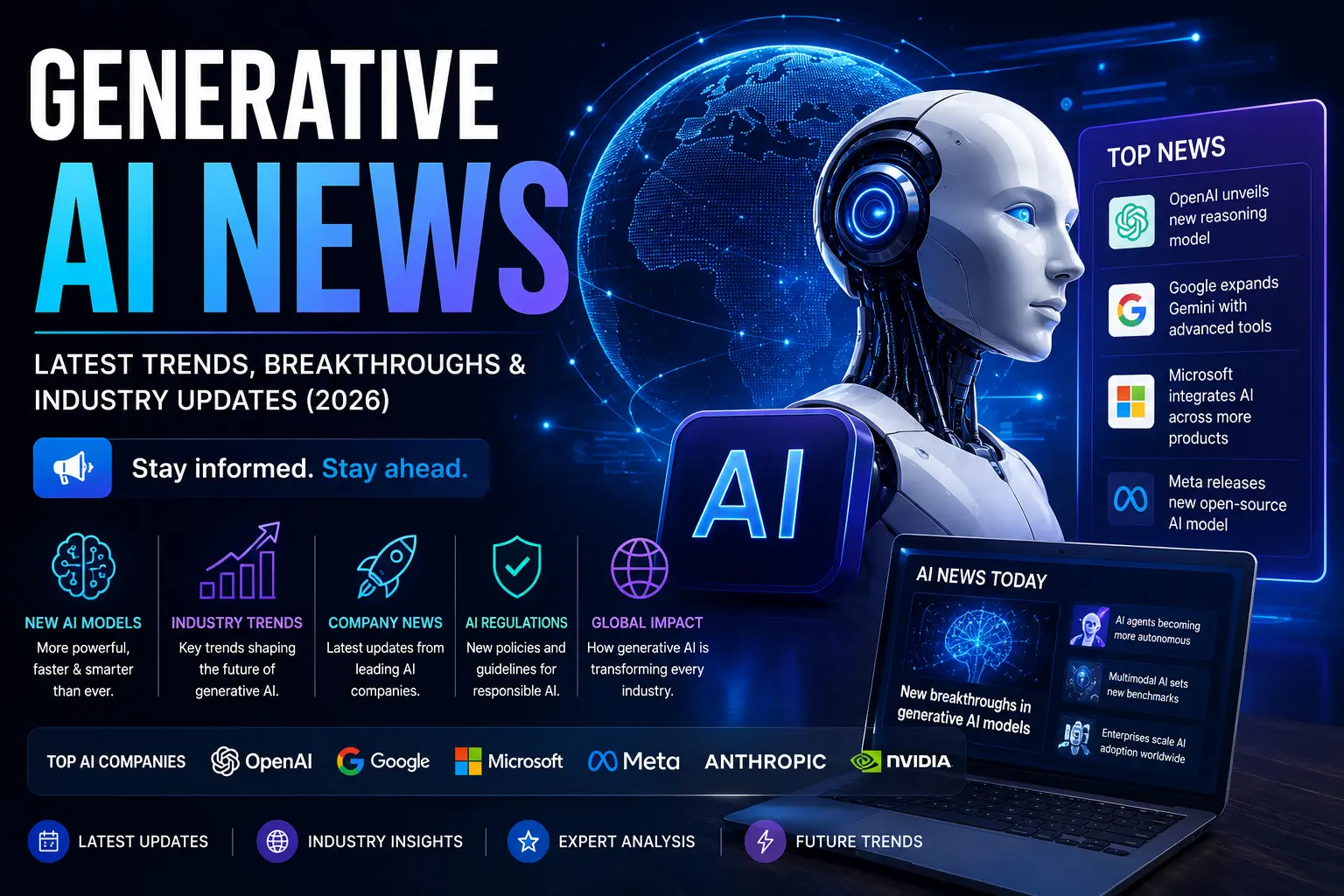
Generative AI News: Quick Overview
Generative AI news covers the latest developments in artificial intelligence, including new AI models, product launches, business adoption, research breakthroughs, and regulatory updates. As generative AI continues to evolve, staying informed helps individuals and businesses understand emerging technologies, evaluate new tools, and prepare for changes that could affect their industries.
Why Generative AI News Matters
Generative AI is evolving at a remarkable pace. New models, features, and applications are introduced regularly, making it one of the fastest-moving areas in technology.
Following trusted AI news helps you:
- Learn about new AI tools and models
- Understand industry trends
- Discover business opportunities
- Keep up with AI regulations
- Compare leading AI platforms
- Make informed technology decisions
Whether you’re a developer, business owner, marketer, student, or simply interested in artificial intelligence, staying current can help you adapt as the technology continues to advance.
Latest Developments in Generative AI
The generative AI industry continues to grow as technology companies invest heavily in research and product development.
Recent developments generally focus on improving model accuracy, expanding multimodal capabilities, increasing reasoning performance, and making AI tools more useful for everyday tasks.
Instead of serving only as chatbots, modern generative AI systems are increasingly designed to assist with coding, writing, research, design, data analysis, customer support, and business automation.
New AI Models Continue to Raise the Standard
One of the biggest trends in generative AI is the steady release of more capable language and multimodal models.
Leading AI companies regularly introduce new versions that improve:
- Reasoning ability
- Coding performance
- Image generation
- Document analysis
- Context length
- Response accuracy
- Multilingual support
These improvements allow AI systems to complete increasingly complex tasks while delivering more natural and reliable responses.
AI Is Becoming More Useful for Businesses
Businesses across many industries are adopting generative AI to improve productivity and reduce repetitive work.
Common business applications include:
- Customer support automation
- Content creation
- Software development
- Marketing assistance
- Internal knowledge management
- Data summarization
- Document generation
- Workflow automation
Instead of replacing employees, many organizations use AI to handle routine tasks so teams can focus on higher-value work.
AI Agents Are Expanding Beyond Simple Chat
Another major trend is the growth of AI agents.
Unlike traditional chatbots that only answer questions, AI agents can perform multi-step tasks with limited human guidance.
For example, an AI agent may:
- Research information
- Generate reports
- Write code
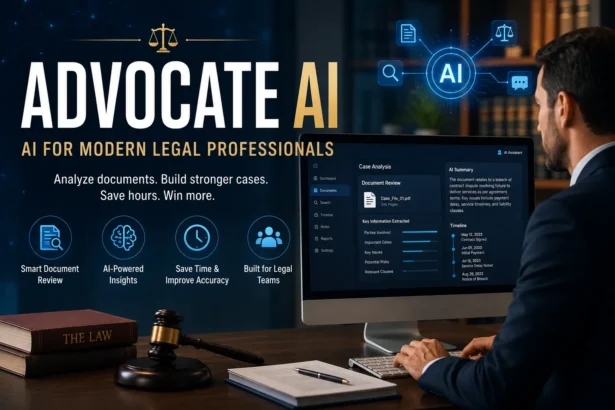
- Analyze documents
- Organize data
- Complete repetitive workflows
This shift is changing how businesses think about automation and digital productivity.
Growing Focus on AI Safety and Responsible Development
As generative AI becomes more capable, companies and governments are paying closer attention to safety, transparency, and responsible deployment.
Key areas of focus include:
- Data privacy
- Bias reduction
- Copyright concerns
- AI-generated misinformation
- Security testing
- Responsible model deployment
Many organizations are introducing governance policies to encourage safe and ethical use of AI technologies while supporting continued innovation.
Top Companies Driving Generative AI Innovation
Several technology companies continue to shape the future of generative AI through ongoing research and product development.
OpenAI
OpenAI remains one of the industry’s leading innovators, developing advanced language models used for writing, coding, research, education, and business productivity.
Its official website provides updates on new products, research, and safety initiatives.
Google continues to invest heavily in generative AI through its AI research teams and products.
The company integrates AI into search, productivity software, cloud services, and developer tools while continuing research into multimodal AI systems.
Anthropic
Anthropic focuses on developing AI systems that prioritize helpful, reliable, and responsible behavior.
Its Claude family of AI assistants has become a popular choice for writing, programming, document analysis, and business workflows.
Microsoft
Microsoft has integrated generative AI into many of its products, including developer tools, workplace applications, and cloud services.
Its partnership with OpenAI has accelerated AI adoption across enterprise software.
Meta
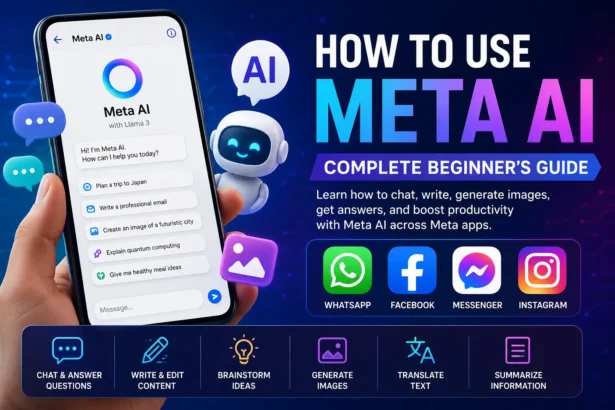
Meta continues developing open-weight AI models and research that support developers, businesses, and academic communities working with artificial intelligence.
Its work has contributed to wider access to AI technologies across the industry.
Industries Being Transformed by Generative AI
Generative AI is no longer limited to the technology sector.
Organizations across multiple industries are using AI to improve efficiency, reduce manual work, and support better decision-making.
Some of the fastest-growing areas include:
Healthcare
Healthcare organizations use AI to summarize medical documentation, assist with research, improve administrative workflows, and support clinical decision-making.
Education
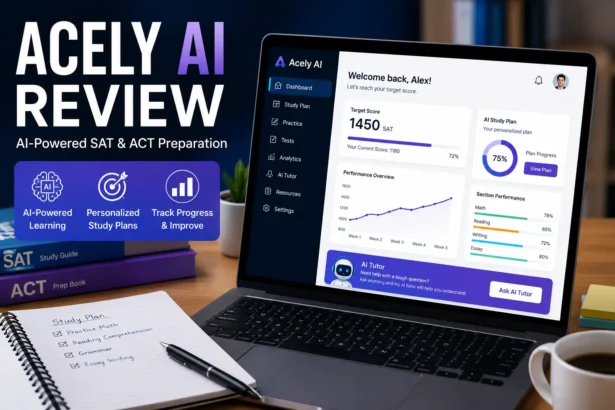
Teachers and students use AI for personalized learning, tutoring, lesson planning, writing assistance, and educational research.
Software Development
Developers rely on AI-powered coding assistants to write code, explain functions, detect bugs, generate documentation, and speed up software development.
Marketing
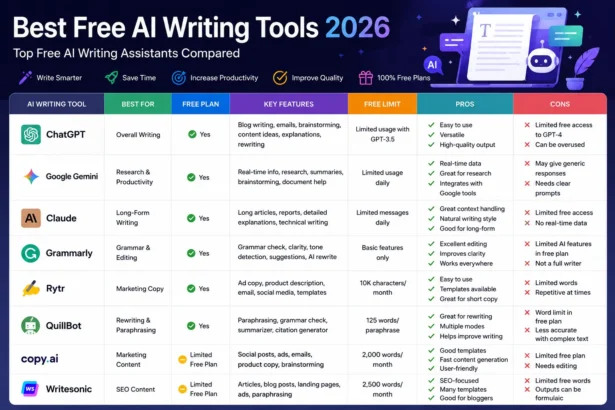
Marketing teams use generative AI to create blog posts, advertising copy, email campaigns, social media content, product descriptions, and SEO-focused articles more efficiently.
Financial Services
Financial institutions apply AI to customer support, document processing, fraud detection, compliance assistance, and internal knowledge management, helping improve operational efficiency while supporting better customer experiences.
What’s Next for Generative AI?
Generative AI is expected to become more capable, accessible, and integrated into everyday software. Rather than existing as standalone chatbots, AI systems are increasingly being built into search engines, productivity tools, business platforms, customer service applications, and development environments.
Several trends are likely to shape the next phase of generative AI:
More Personalized AI
Future AI systems will better understand user preferences, work habits, and long-term projects, allowing them to deliver more relevant and personalized assistance.
Improved Multimodal Capabilities
Generative AI is moving beyond text. Modern models can already work with images, audio, video, and documents, and future systems are expected to combine these capabilities even more effectively.
Wider Enterprise Adoption
Businesses are investing in AI to automate repetitive tasks, improve employee productivity, and enhance customer experiences. As implementation becomes easier, adoption is expected to continue across organizations of all sizes.
Stronger AI Governance
Governments and technology companies are continuing to develop standards for responsible AI use. Future regulations are likely to focus on transparency, privacy, intellectual property, and the safe deployment of AI systems.
Challenges Facing Generative AI
Although the technology has advanced rapidly, several challenges remain.
Accuracy
AI models can sometimes generate incorrect or outdated information. Users should verify important facts, especially in professional, legal, financial, or medical contexts.
Privacy and Security
Organizations using AI should ensure that sensitive information is handled responsibly and that employees follow appropriate data security practices.
Copyright and Content Ownership
Questions around AI-generated content and intellectual property continue to evolve. Businesses should stay informed about applicable laws and platform policies.
Ethical Considerations
Developers and organizations are working to reduce bias, improve transparency, and ensure AI systems are used responsibly across different industries.
Frequently Asked Questions
1. What is generative AI news?
Generative AI news covers recent developments in artificial intelligence, including new AI models, company announcements, research breakthroughs, product launches, business adoption, and regulatory updates.
2. Why should I follow generative AI news?
Keeping up with AI news helps you understand emerging technologies, discover new tools, monitor industry trends, and identify opportunities for learning or business growth.
3. Which companies lead generative AI development?
Several companies are advancing generative AI, including OpenAI, Google, Anthropic, Microsoft, Meta, and other organizations investing heavily in AI research and applications.
4. How often does generative AI change?
The industry evolves quickly. New models, features, research papers, and product updates are released throughout the year, making it useful to follow trusted AI news sources regularly.
5. Which industries benefit most from generative AI?
Generative AI is being adopted across healthcare, education, software development, finance, marketing, customer support, manufacturing, and many other industries.
6. Can businesses use generative AI safely?
Yes, provided they implement appropriate security policies, protect sensitive information, and use AI responsibly. Human review remains important for critical decisions and customer-facing content.
7. Is generative AI replacing human jobs?
Generative AI is changing how many jobs are performed, but in most cases it acts as a productivity tool rather than a complete replacement. Many professionals use AI to automate repetitive tasks while focusing on work that requires creativity, expertise, and judgment.
8. What is the difference between generative AI and traditional AI?
Traditional AI often focuses on analyzing data or making predictions, while generative AI creates new content such as text, images, code, audio, or video based on user prompts.
9. Where can I find reliable generative AI news?
Official company announcements, research organizations, and established technology publications are generally the most reliable sources for AI news and product updates.
10. What skills should I learn to work with generative AI?
Useful skills include prompt writing, AI-assisted research, data analysis, programming, content creation, and understanding responsible AI practices. Learning how to evaluate AI-generated output is becoming increasingly valuable.
Conclusion
Generative AI continues to reshape how people work, learn, create, and solve problems. From new AI models and enterprise adoption to evolving regulations and research breakthroughs, the industry is advancing at an impressive pace.
Following generative AI news helps you stay informed about important developments, understand how AI is affecting different industries, and make better technology decisions. As AI capabilities continue to grow, staying up to date will become increasingly valuable for businesses, developers, students, and everyday users alike.
For the latest official updates, visit OpenAI and Google AI, where you can learn about new models, research, and product announcements directly from the organizations building many of today’s leading AI technologies.