
Crypto Mining Shipping Container: Quick Answer
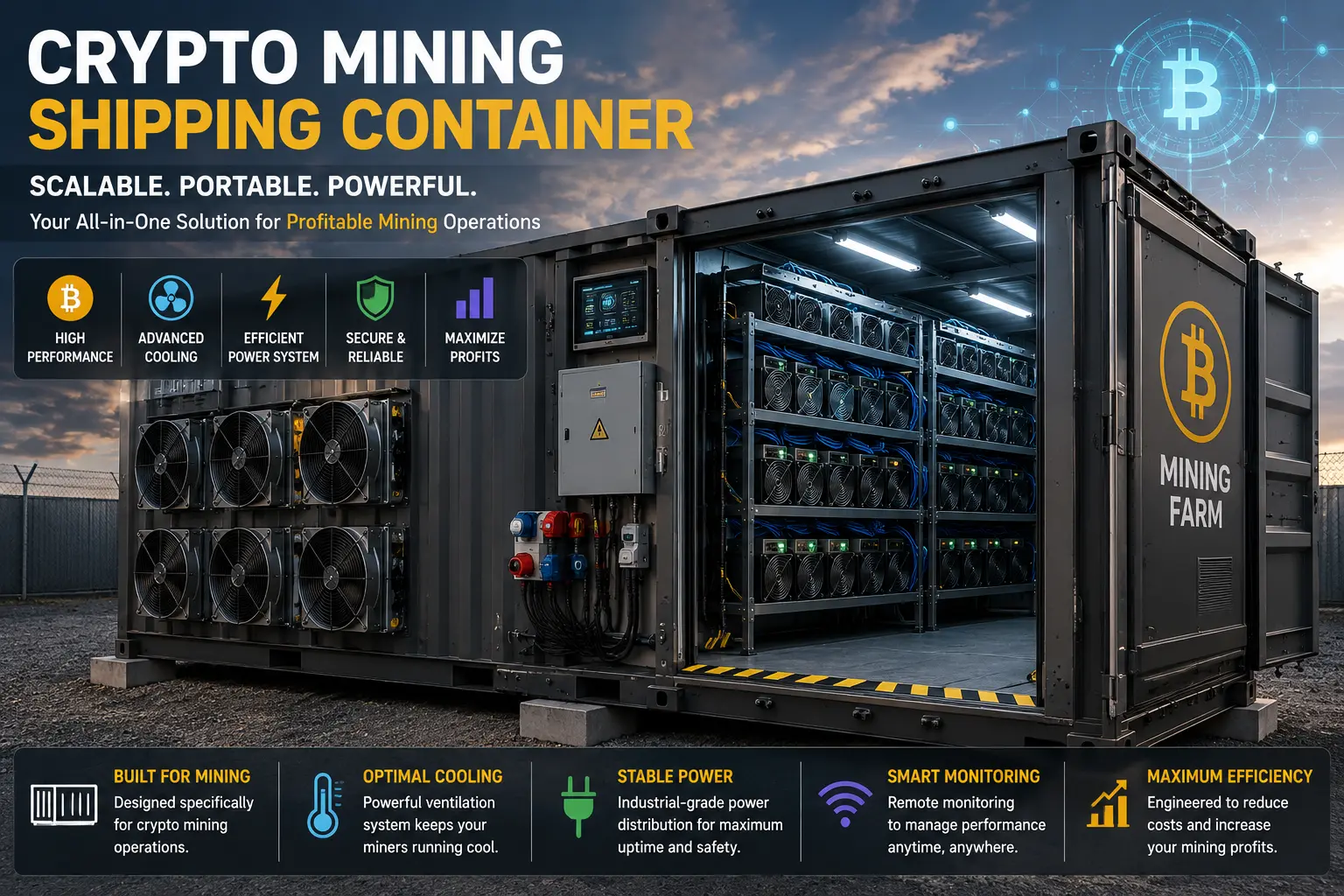
A crypto mining shipping container is a converted shipping container designed to house cryptocurrency mining equipment such as ASIC miners. It combines power distribution, cooling systems, networking, and security into a portable mining facility that can be set up almost anywhere with a reliable power supply. These containers are popular with Bitcoin miners because they are scalable, easy to manage, and quick to deploy compared to traditional mining buildings.
What Is a Crypto Mining Shipping Container?
A crypto mining shipping container is essentially a standard steel shipping container that has been converted into a self-contained cryptocurrency mining farm.
Instead of transporting goods, the container is equipped with:
- ASIC mining machines
- High-capacity electrical systems
- Cooling and ventilation equipment
- Network infrastructure
- Fire protection systems
- Security features
- Remote monitoring hardware
This design allows mining operations to be set up much more quickly than building a dedicated mining facility.
Because shipping containers are built to withstand harsh weather conditions, they are often used in remote locations where electricity is cheap and internet connectivity is available.
How Does a Crypto Mining Shipping Container Work?
The concept is relatively straightforward.
Electricity enters the container through a high-capacity power connection and is distributed to multiple ASIC miners using industrial-grade power distribution units (PDUs).
As the miners perform cryptographic calculations to secure blockchain networks, they generate a significant amount of heat. Cooling systems continuously remove this heat to keep the equipment operating within safe temperature ranges.
Meanwhile, a network connection links the miners to a cryptocurrency mining pool or blockchain network, allowing them to contribute computing power and receive mining rewards based on performance.
Main Components of a Mining Container
Although designs vary between manufacturers, most containerized mining farms include the same core components.
ASIC Mining Hardware
ASIC (Application-Specific Integrated Circuit) miners are purpose-built machines optimized for mining cryptocurrencies such as Bitcoin. Compared with GPUs, ASICs deliver much higher hash rates while using energy more efficiently for their intended algorithms.
Popular models include equipment from manufacturers such as Bitmain and MicroBT.
Power Distribution System
Reliable electricity is one of the most important parts of any mining operation.
Mining containers typically include:
- Main electrical panels
- Industrial circuit breakers
- Power Distribution Units (PDUs)
- Surge protection
- Emergency shut-off switches
These components help deliver stable power to every mining device.
Cooling and Ventilation
Mining equipment produces substantial heat around the clock.
To maintain performance and extend hardware lifespan, mining containers often use:
- High-capacity intake fans
- Exhaust fans
- Air filtration systems
- Temperature sensors
- Automated airflow controls
Some advanced deployments also use immersion cooling, where specialized cooling fluid absorbs heat more efficiently than air.
Networking Equipment
Every ASIC miner must maintain a stable internet connection.
Most containers include:
- Industrial networking switches
- Ethernet cabling
- Routers
- Remote monitoring systems
- Environmental sensors
These systems allow operators to monitor mining performance from virtually anywhere.
Air Cooling vs. Immersion Cooling
Choosing the right cooling method has a major impact on efficiency, maintenance, and long-term operating costs.
Feature | Air Cooling | Immersion Cooling |
Initial Cost | Lower | Higher |
Cooling Efficiency | Good | Excellent |
Noise Level | High | Very Low |
Maintenance | Simple | More Specialized |
Energy Efficiency | Good | Better |
Hardware Lifespan | Good | Often Longer |
Air cooling remains the most common solution because it is less expensive and easier to maintain. However, immersion cooling is becoming increasingly popular for large commercial mining farms due to its ability to manage heat more effectively and improve overall efficiency.
If you’re interested in blockchain infrastructure, you may also enjoy our guide on Crypto30x.com to learn about another cryptocurrency-related platform.
Choosing the Right Shipping Container Size
Most commercial mining operations use either 20-foot or 40-foot shipping containers. The right choice depends on your available budget, power capacity, and future expansion plans.
20-Foot Mining Container
A 20-foot container is ideal for smaller or pilot mining operations.
It typically offers:
- Lower upfront cost
- Easier transportation
- Faster installation
- Lower power requirements
- Simpler cooling management
This size works well for businesses or investors who want to start small and scale later.
40-Foot Mining Container
A 40-foot container provides significantly more space for mining equipment and supporting infrastructure.
Benefits include:
- Greater ASIC capacity
- Better scalability
- More efficient use of infrastructure
- Suitable for commercial mining farms
- Higher long-term mining potential
Although the initial investment is higher, larger containers often provide better efficiency per mining unit when fully utilized.
How Much Does a Crypto Mining Shipping Container Cost?
The total cost depends on factors such as container size, cooling system, electrical upgrades, and the number of mining machines installed.
Here’s a general estimate:
Component | Estimated Cost |
Shipping Container | $3,000–$8,000 |
Electrical System | $8,000–$30,000 |
Cooling & Ventilation | $10,000–$50,000 |
Networking Equipment | $1,000–$5,000 |
ASIC Miners | Varies by model and quantity |
Installation & Configuration | $5,000–$20,000 |
Because cryptocurrency hardware prices fluctuate frequently, it’s best to request current quotes before making purchasing decisions.
Advantages of Containerized Crypto Mining
Container-based mining has become increasingly popular because it combines flexibility with efficient infrastructure.
Some of the biggest advantages include:
Faster Deployment
Instead of constructing a dedicated mining facility, operators can deploy a prepared container much more quickly.
Scalability
Need additional mining capacity?
Simply add another container rather than expanding an existing building.
Mobility
Shipping containers can be transported to locations where electricity is more affordable or where renewable energy is available.
Simplified Maintenance
Because all equipment is organized within a single enclosure, technicians can monitor and service miners more efficiently.
Weather Protection
Mining hardware remains protected from rain, dust, wind, and other environmental conditions when properly installed and maintained.
Challenges to Consider
While mining containers offer many advantages, they also present several practical challenges.
High Power Requirements
Large mining farms consume substantial amounts of electricity. Before deployment, operators should confirm that the local electrical infrastructure can safely support the expected load.
Heat Management
ASIC miners generate significant heat around the clock. Without an effective cooling system, equipment performance may decrease and hardware lifespan can be reduced.
Noise
Air-cooled mining containers can be extremely loud due to the constant operation of high-speed cooling fans. This makes them better suited for industrial or remote locations rather than residential areas.
Regulatory Considerations
Electricity regulations, zoning requirements, environmental policies, and cryptocurrency laws differ by country and region. Always review applicable local requirements before launching a mining operation.
Is a Crypto Mining Shipping Container Profitable?
A crypto mining shipping container can be profitable, but profitability depends on several factors rather than the container itself.
The most important variables include:
- Electricity cost
- Mining hardware efficiency
- Cryptocurrency prices
- Mining difficulty
- Equipment uptime
- Cooling efficiency
- Maintenance expenses
For example, a mining operation with access to low-cost electricity and modern ASIC miners generally has a better chance of remaining profitable than one using older equipment with high energy costs.
Because cryptocurrency markets change frequently, profitability should be evaluated using current market conditions and realistic operating costs rather than relying on fixed income estimates.
Should You Buy or Build a Mining Container?
Both approaches have advantages depending on your budget, technical expertise, and timeline.
Option | Best For | Pros | Cons |
Buy a Pre-Built Container | Businesses & commercial miners | Ready to deploy, professionally designed, technical support | Higher upfront cost |
Build Your Own | Experienced miners & engineers | Greater customization, potentially lower build cost | Requires design, electrical, and cooling expertise |
If you’re new to containerized mining, purchasing a professionally designed solution can reduce setup complexity. Experienced operators with access to qualified electricians and HVAC specialists may prefer building a custom container tailored to their needs.
Frequently Asked Questions
1. What is a crypto mining shipping container?
A crypto mining shipping container is a modified shipping container equipped with cryptocurrency mining hardware, electrical systems, cooling equipment, networking infrastructure, and security features to operate as a portable mining facility.
2. How many ASIC miners fit inside a shipping container?
The number depends on the container size, cooling design, power availability, and the dimensions of the mining equipment. Manufacturers offer different layouts based on these requirements.
3. What size shipping container is best for crypto mining?
A 20-foot container is suitable for smaller deployments, while a 40-foot container is generally preferred for larger commercial mining operations because it provides more space for equipment and infrastructure.
4. How much electricity does a mining container require?
Power requirements vary widely depending on the number and type of ASIC miners installed. Commercial mining containers typically require substantial electrical capacity and should be designed by qualified professionals.
5. What cooling system is best?
Air cooling remains the most common option because of its simplicity and lower cost. Immersion cooling may offer better thermal performance and reduced noise for some large-scale operations, although it usually requires a higher initial investment.
6. Can a mining container use renewable energy?
Yes. Some mining operations are powered by renewable energy sources such as solar, wind, or hydroelectric power, provided the energy supply is reliable and sufficient for the equipment’s requirements.
7. Is a mining container portable?
Yes. One of its biggest advantages is portability. Containers can be transported to different locations using standard shipping and logistics methods, making relocation easier than with permanent facilities.
8. How long does it take to deploy a mining container?
Deployment time depends on whether the container is pre-built or custom-designed, as well as local site preparation, electrical installation, and networking requirements.
9. What maintenance does a mining container require?
Routine maintenance includes cleaning air filters, inspecting electrical connections, monitoring cooling systems, updating mining software, and replacing faulty hardware when necessary.
10. Who should consider a crypto mining shipping container?
Containerized mining solutions are generally best suited for businesses, professional mining operators, or organizations planning medium- to large-scale cryptocurrency mining projects with appropriate infrastructure.
Conclusion
A crypto mining shipping container offers a practical way to deploy and manage cryptocurrency mining equipment in a compact, scalable, and portable environment. By integrating power distribution, cooling, networking, and security into a single unit, these containers simplify infrastructure planning and make expansion more straightforward.
However, success depends on careful planning. Electricity costs, cooling efficiency, hardware selection, maintenance, and local regulations all play a significant role in long-term performance. Before investing, compare available solutions, estimate operating expenses realistically, and choose equipment that aligns with your mining goals.